
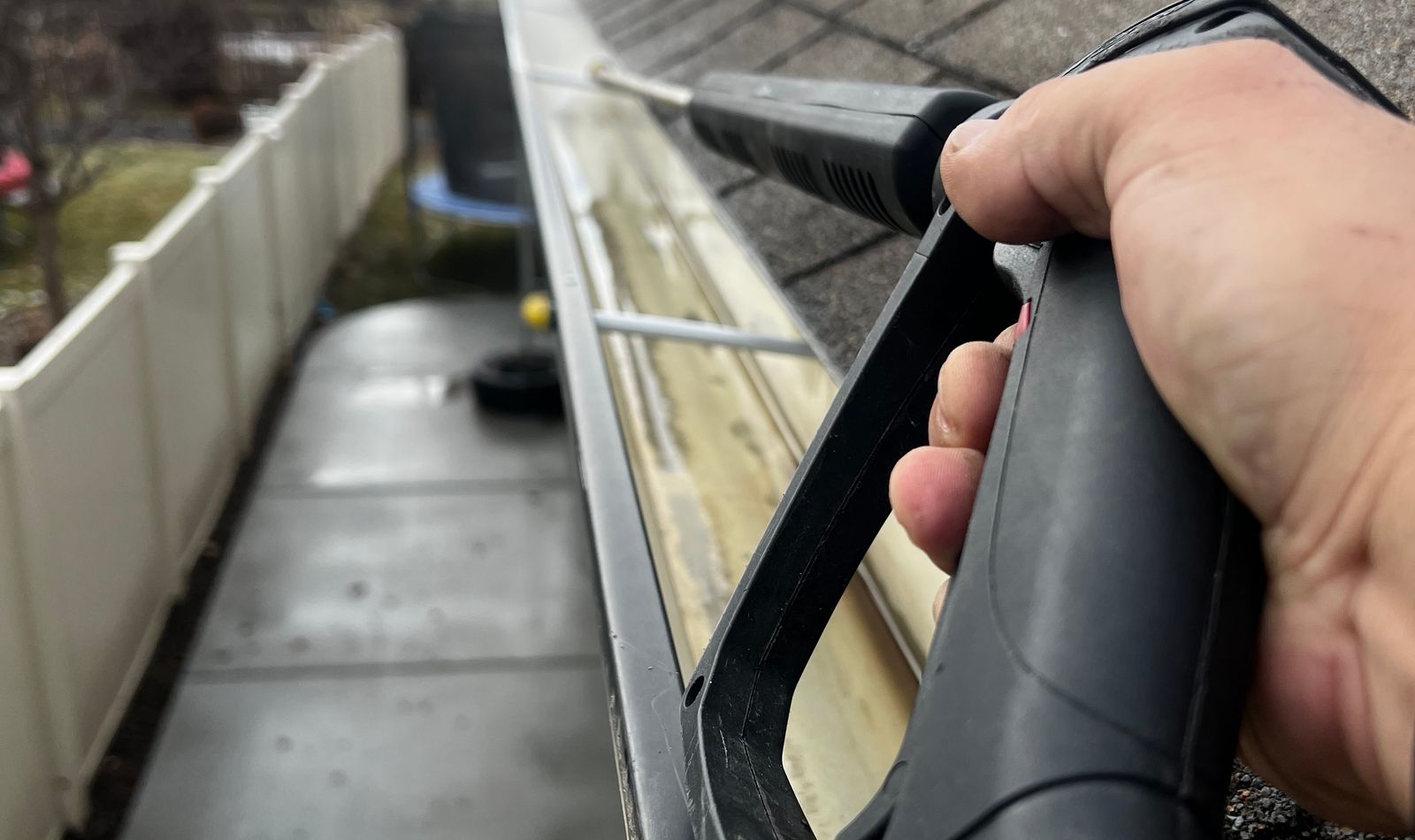
A gutter can look clean and still overflow in heavy rain. Cleaning removes one common cause, but a roof drainage system also depends on downspout capacity, gutter slope, outlet position, roof geometry, and where the water goes after it reaches the ground.
The downspout may still be restricted
Debris often compacts inside an elbow or at the outlet where it cannot be seen from above. During rain, the gutter fills faster than the restricted downspout can drain. A proper gutter cleaning should include attention to accessible outlets and a visible flow check where conditions allow.
The gutter may not slope toward the outlet
Gutters need a subtle, continuous fall. Hangers can loosen, fascia can move, and long runs can sag. Standing water after the rain stops is a useful clue. Re-pitching or rehanging may be required; repeated cleaning alone will not correct the geometry.
A roof valley can overwhelm one small section
Valleys collect water from two roof planes and release it at a concentrated point. During an intense Lower Mainland downpour, water can shoot over the gutter even when the rest of the system is clear. The solution depends on the roof edge, gutter size, outlet location, and flashing, so avoid adding improvised barriers that could push water beneath shingles.
The system may be undersized or poorly configured
- Too few downspouts for the roof area
- Long gutter runs with one outlet
- Small or restrictive elbows
- Downspouts connected to blocked underground drains
- Roof additions that changed runoff patterns
Overflow behind the gutter needs prompt attention
If water runs between the roof edge and the gutter, the issue may involve apron flashing, a loose gutter, an edge detail, or rot in the fascia. Photograph the exact location during rain if it is safe to do so. That evidence is often more useful than a dry-weather description.
Start with diagnosis, not assumptions
Note whether overflow occurs everywhere or only at one corner, whether it begins immediately or after several minutes, and whether water remains afterward. Roof Upkeep can clean and document the system, while repair or drainage specialists may be needed for slope, capacity, or underground piping changes. Request a roofline assessment.