
Cleaning your gutters is one of those jobs that seems simple until you’re balancing on a ladder with wet leaves in your hands. Done right, it’s a manageable DIY task. Done carelessly, it’s a trip to the emergency room. If you’re going to tackle it yourself, how to clean gutters safely is the most important thing to learn first.
Here’s a practical, step-by-step guide that keeps you safe and gets the job done properly.
Before You Start: Safety First
Choose the Right Day
Never clean gutters in the rain. Wet ladders and wet roofs are dangerous, and wet debris is heavy and slippery. Pick a dry day with no wind. Late morning is often best, once any overnight dew has dried.
Use the Right Ladder
Your ladder should be tall enough that you’re not reaching above your head, and it must be rated for your weight. Set it on firm, level ground. Use a ladder stabilizer or standoff if you have one—it keeps the ladder from pressing against the gutter and damaging it.
Have a Spotter
If at all possible, have someone hold the ladder while you work. A second pair of hands also helps carry tools and catch debris. It’s a simple step that dramatically reduces risk.
Wear the Right Gear
- Work gloves to protect your hands from sharp metal and debris.
- Safety glasses to keep grit and water out of your eyes.
- Non-slip shoes with good grip.
- Long sleeves to protect your arms from scratches.
What You’ll Need
- A sturdy ladder with a stabilizer.
- A gutter scoop or a plastic scoop that won’t scratch the gutter.
- A bucket or tarp to collect debris.
- A garden hose with a spray nozzle.
- A plumber’s snake or a high-pressure nozzle for downspouts.
- Work gloves and safety glasses.
Step-by-Step: How to Clean Gutters
Step 1: Set Up Your Work Area
Place a tarp on the ground beneath your work area to catch debris and protect your landscaping. Position your bucket where you can reach it comfortably. Never carry a heavy bucket up the ladder with you.
Step 2: Scoop Out the Debris
Starting at the downspout end and working toward it, scoop out the leaves, needles, and muck. Work in sections and move your ladder as you go—don’t overreach. Overreaching is one of the most common causes of ladder falls.
Step 3: Flush the Gutter
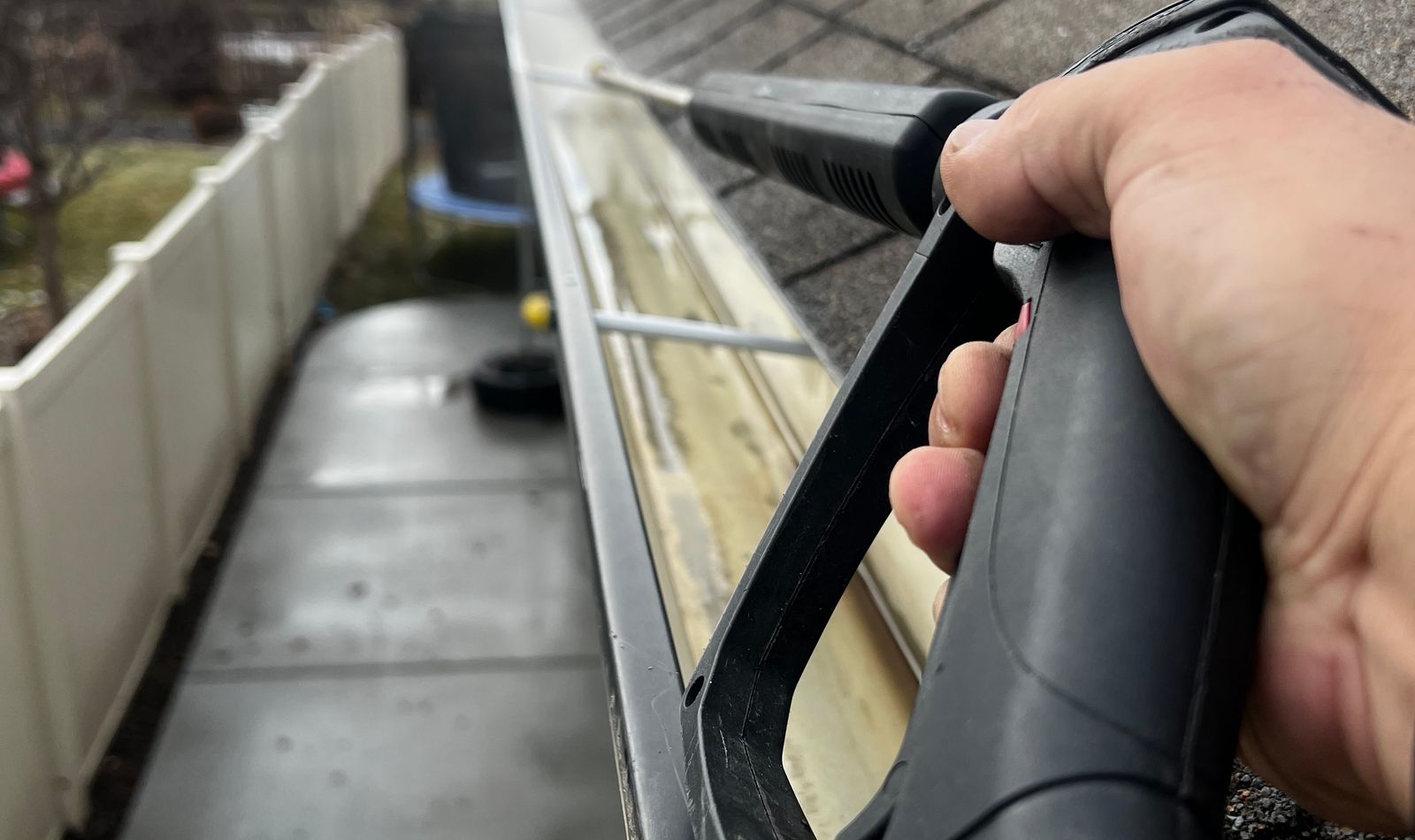
Once the big debris is out, use your hose to flush the gutter clean. This washes away the fine silt and reveals any remaining clogs. Watch how the water flows—it should run freely toward the downspout.
Step 4: Clear the Downspouts
If water pools instead of draining, the downspout is blocked. Use your hose to flush it from the top. For stubborn clogs, a plumber’s snake can break up the blockage from the downspout opening. (We have a full guide on unclogging downspouts if you need it.)
Step 5: Check for Damage
While you’re up there, look for:
- Sagging or loose gutters.
- Rust spots or holes.
- Loose or missing fasteners.
- Cracks in the seams.
- Rotting fascia behind the gutter.
Make a note of anything you find so you can address it.
Step 6: Dispose of Debris
Scoop the collected debris into your green bin or compost. Don’t dump it into storm drains—it can contribute to local flooding.
When to Call a Professional
DIY cleaning makes sense for a single-storey home with easy access. But consider hiring a professional if:
- Your home is two storeys or more.
- Your roof is steep or high-pitched.
- You have limited mobility or balance concerns.
- Your gutters are heavily clogged or damaged.
- You’d rather not spend your weekend on a ladder.
There’s no shame in calling for help. A professional has the right equipment, the training, and the experience to do the job safely and thoroughly.
Conclusion
Learning how to clean gutters safely is a valuable skill—but your safety matters more than saving a few dollars. If you’re comfortable on a ladder and your home is easy to access, this guide will serve you well. If not, leave it to the pros.
At RoofUpkeep, we clean gutters safely and thoroughly across New Westminster, Burnaby, Coquitlam, and the Lower Mainland. Get a free quote at https://roofupkeep.com/#quote or call +1-778-513-7503. We’ll handle the ladder work—you keep both feet on the ground.